
Is the Software Stock Rebound Here?

Software stocks have taken a beating since AI took off. Even the fundamentally sound ones got caught in the crossfire—punished not because their businesses deteriorated, but simply because the market rotated hard into AI names. And yet, it’s difficult to buy when a stock keeps getting cheaper.
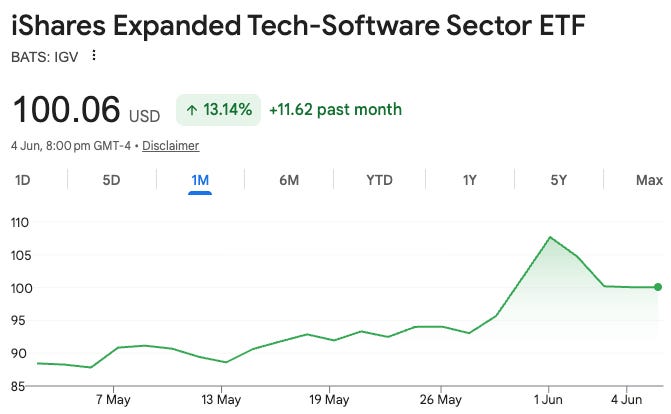
Most investors are waiting for a bottom to form. So when the iShares Expanded Tech-Software Sector ETF (IGV) surged more than 10% in the past month, social media lit up. People started calling the software rebound is here.
Before we get carried away, let me offer a more useful lens by using Stan Weinstein’s Stage Analysis. I covered this about 1.5 years ago, so I won’t rehash everything. The short version: a stock is only truly in a rebound when it enters Stage 2. Most will like to think of entering in Stage 1, which is too early.
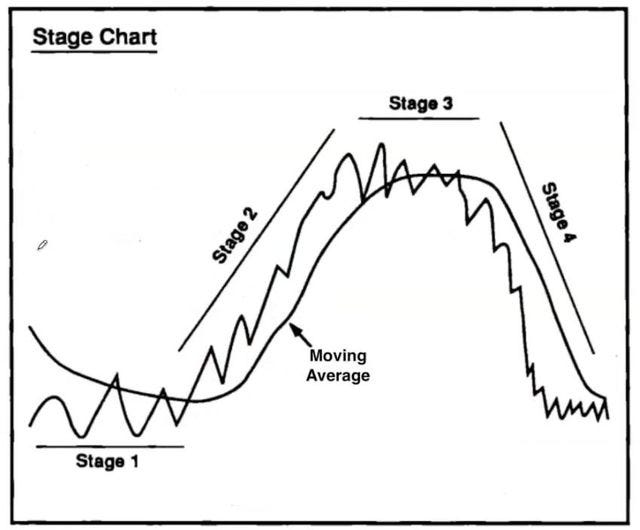
Stage 2 has a clear technical definition. The stock price should be trading above its 200-Day Moving Average (200DMA), and the 200DMA itself should be pointing upwards. Until both conditions are met, any price recovery is premature, suggesting a bounce, not a rebound.
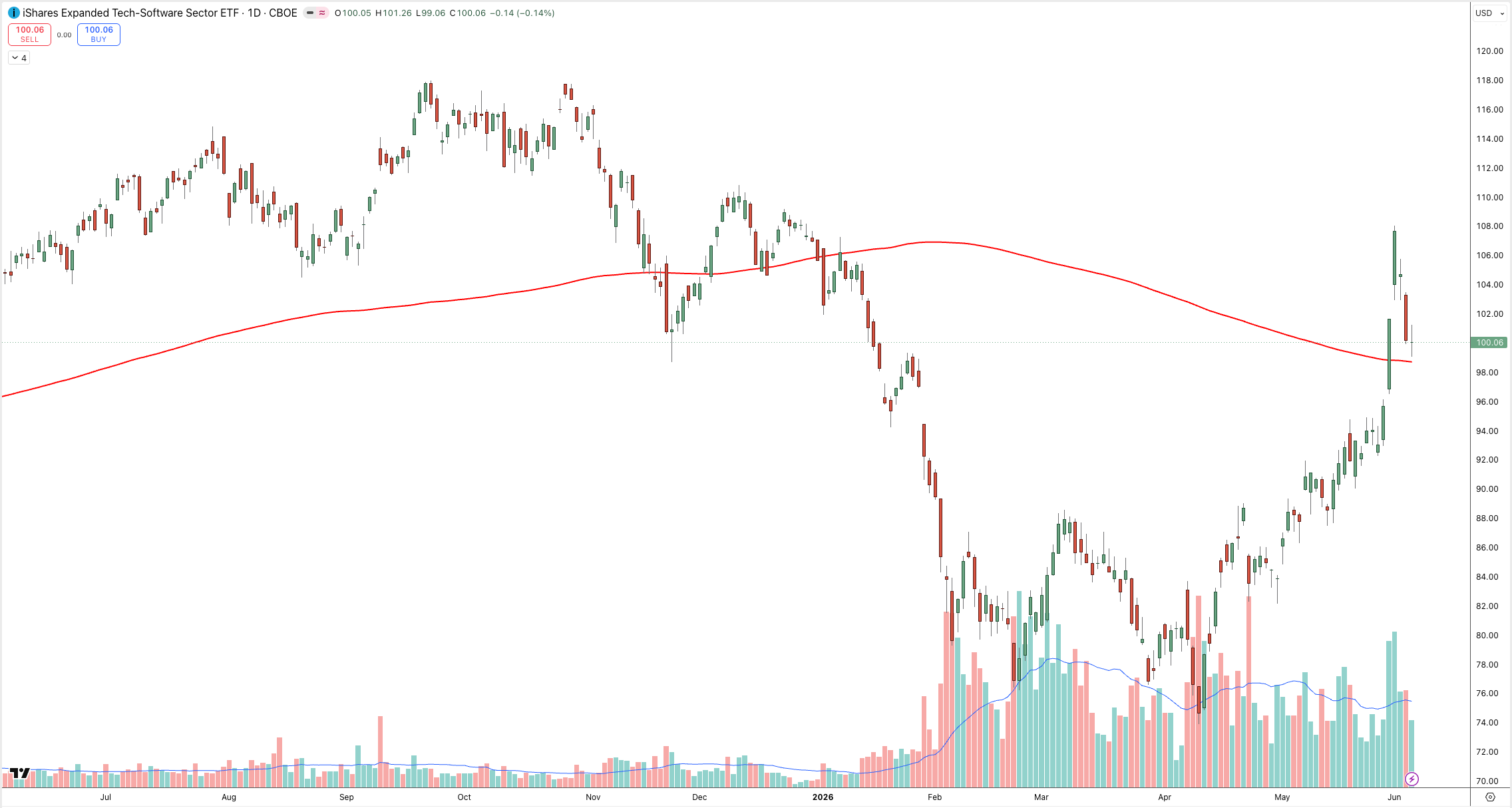
Take the IGV chart. Yes, the price has climbed above the 200DMA. That’s encouraging. But the 200DMA is still sloping downwards. One condition met, one not. Promising but not enough to call a rebound.
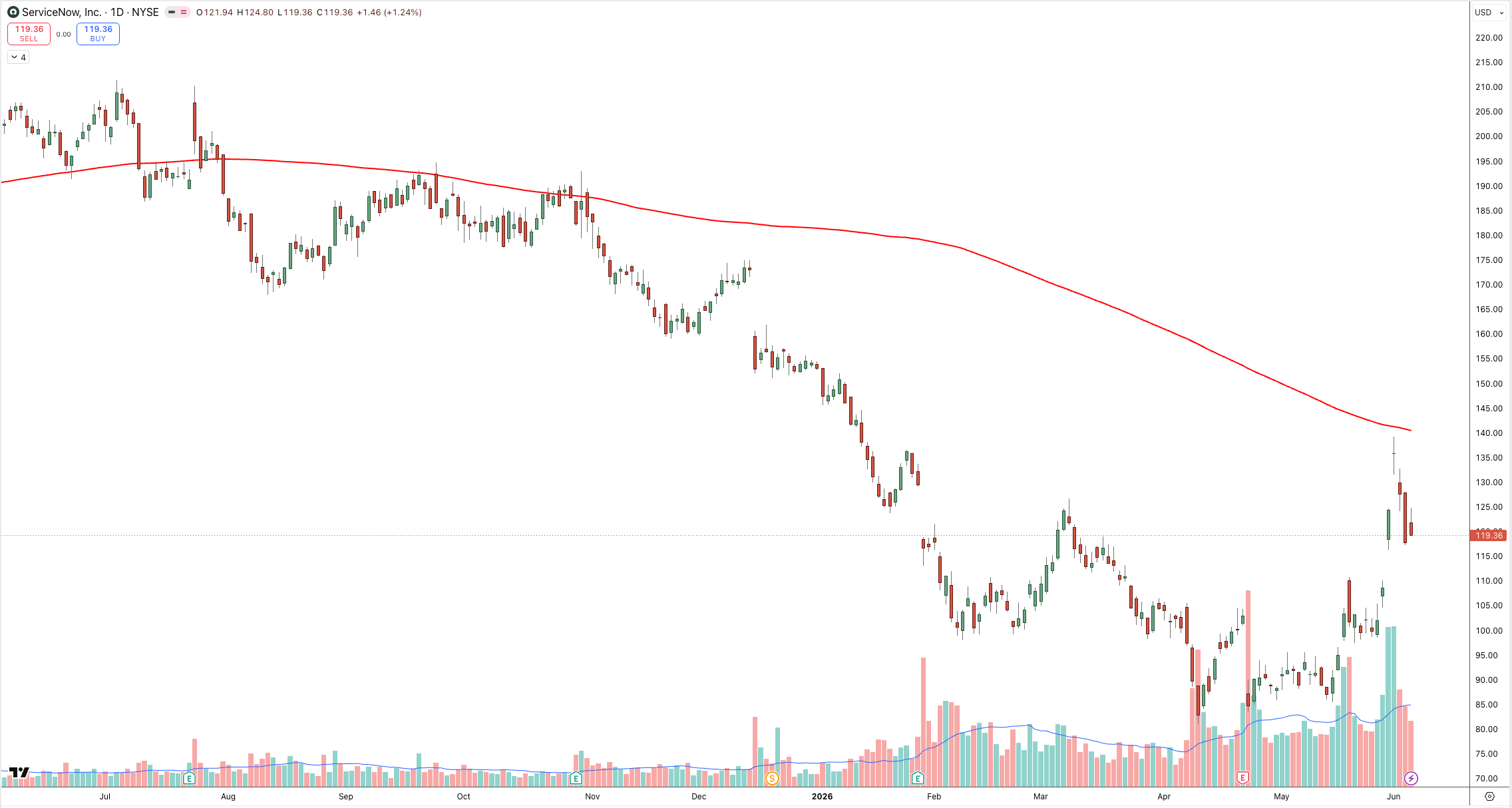
ServiceNow tells a starker story. The price is still below the 200DMA, and the 200DMA is pointing down. Worse, you can see how the price surged, approached the 200DMA, and then got rejected. The moving average is acting as a ceiling. Price needs to convincingly break above it before we can talk about a genuine rebound.
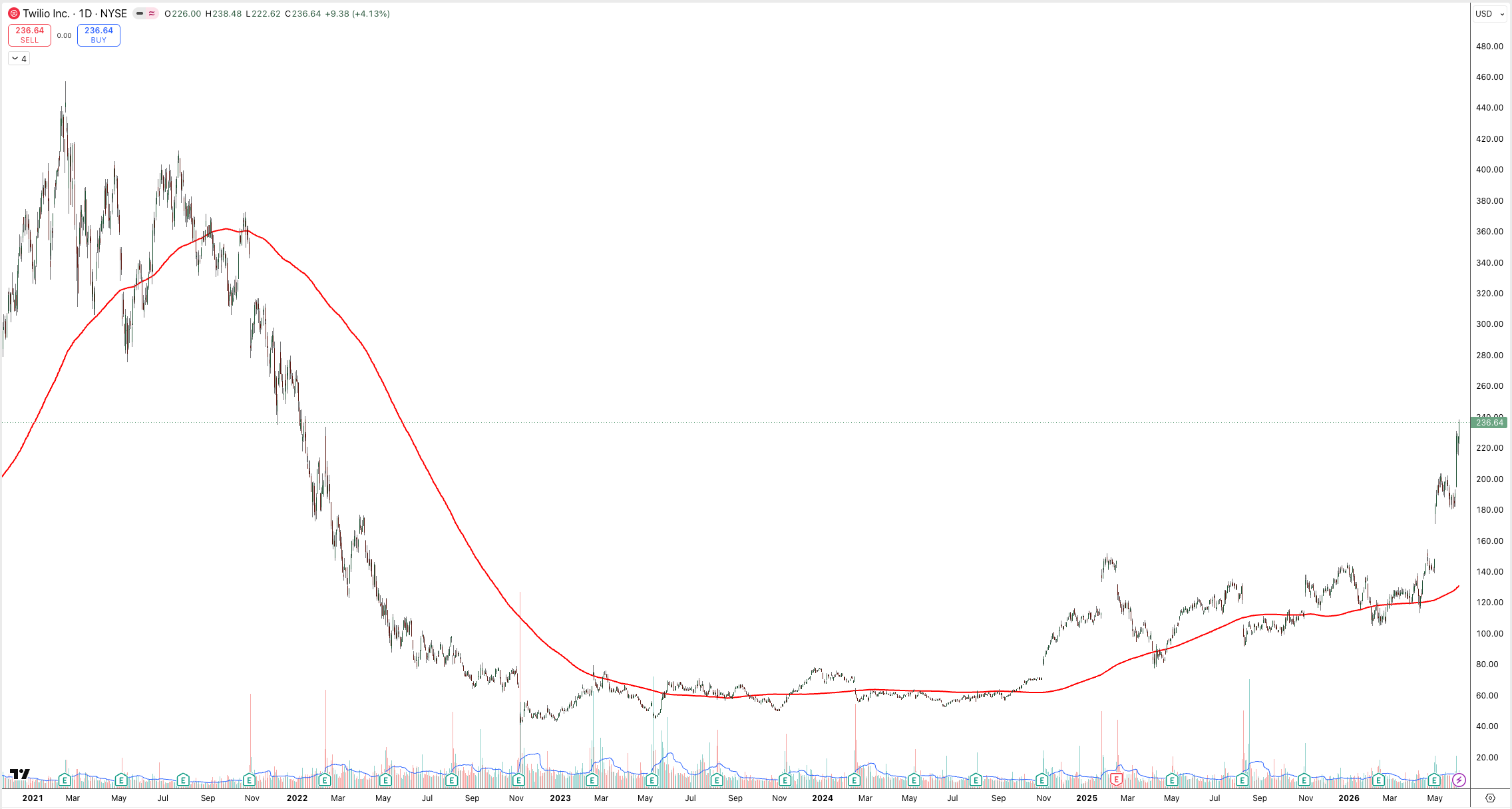
Not all software stocks are stuck, though. Twilio broke out into Stage 2 in late 2024 and has been in a strong uptrend over the past month. Some may say that the stock price is too high but not really if we compare to its 2021 all-time high.
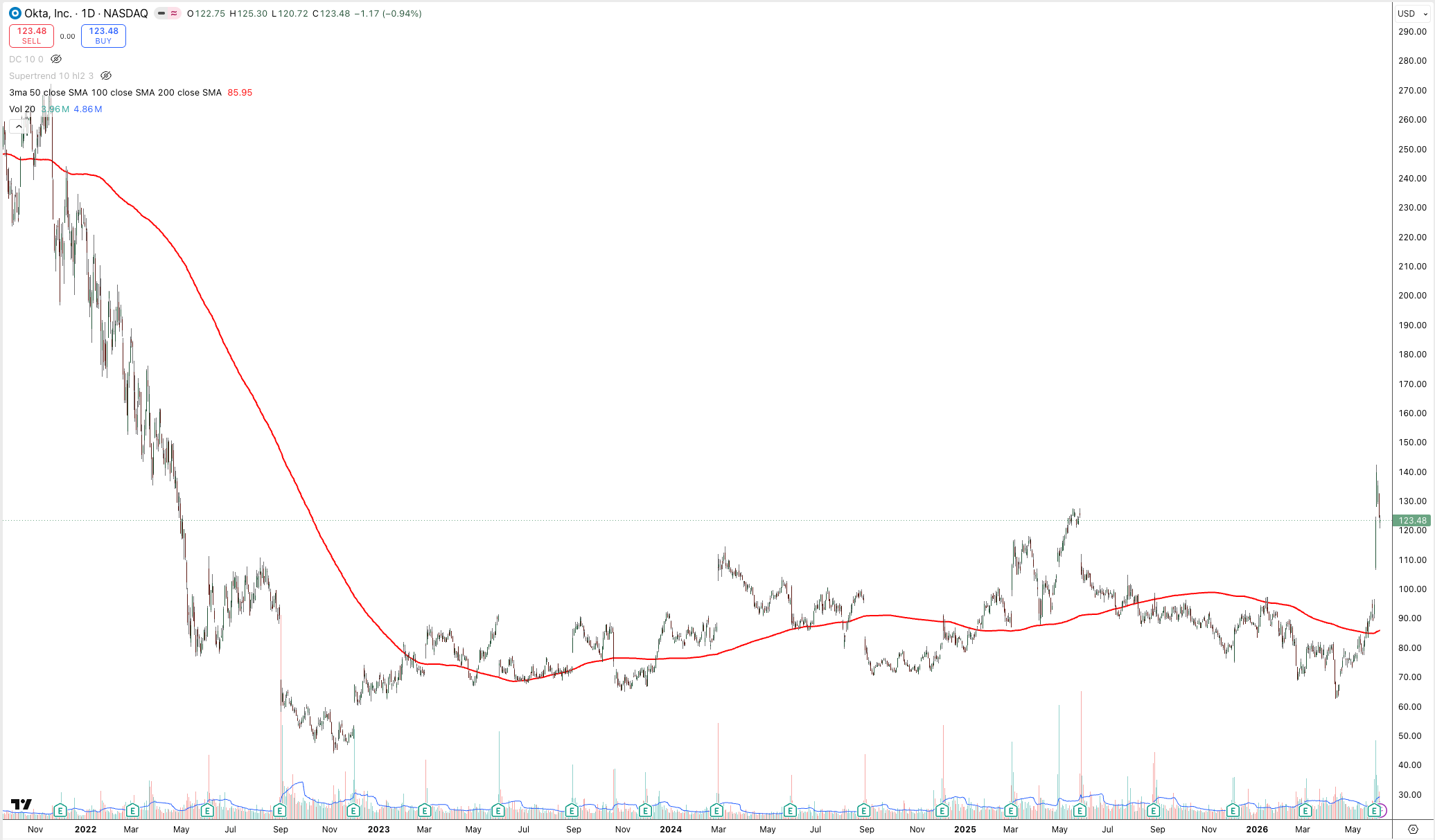
Cybersecurity has broadly fared better than the broader software sector. Beyond the usual names like CrowdStrike and Palo Alto Networks, Okta (an online identity company) is also showing early Stage 2 characteristics. Worth watching.
I hope you can see that technical analysis is helpful, especially for timing entries on stocks that are bottoming.
Here’s the dilemma every value investor faces: a software stock might be undervalued at $100. Do you buy at $50? At $20? Both are undervalued. But if the stock continues falling to $10, even buying at $20 yields a 50% loss and feels expensive in hindsight. Stage Analysis helps you avoid this trap by waiting for price confirmation before committing.
Some will argue that by the time Stage 2 begins, the price is already much higher. True. But the trade-off is that you’re buying with more certainty and not catching a falling knife without knowing where the bottom is. The cost of not waiting can be far greater losses.
That said, don’t rely on technical analysis alone unless you have a clear entry and exit plan with proper risk management. Buying on Stage 2 without knowing when to sell is still risky as stocks in Stage 2 can roll over into Stage 4 when the rebound fizzles.
The most robust method is to use fundamental and technical analysis together.
Start with fundamentals to make sure it’s a quality business that has been unfairly punished by the market. Then use technical analysis to time your entry when the rebound is confirmed. Layer in valuation to ensure the stock remains undervalued even as it enters Stage 2.
This way, you’re buying with discipline and not on hope or someone on social media declared a rebound, but because the evidence from multiple angles points in the same direction.